This day will be soley focused on Anime/Manga type activites, and what place better to go to then Akihabara.  This is Tokyo’s ultimate otaku district, and its famous for its electronic centers, computers, manga, anime and figurines.  It literaly is, heaven on earth for geeky kids that are into comics, gadgets and cartoons (pretty much describes me and my three travel mates!). We will take the JR Yamanoate Line to Akihabara Station, and exit at the "Akihabara Electric Town" exit.  When exiting the Akihabara station, we will go directly to Don Ouijote which is a shopping center filled with anything and everything from makeup, clothes and accessories.  After some time there, we’ll be going anime crazy at Animate and the Figurine Shops.  Animate is Akihabara’s biggest manage and anime store.  It’s an entire building filled with manga, figurines of manga/anime characters, DVD boxed sets, posters, etc.  If we can’t find a find a figurine of our favourite character, we can go to the Figure Shops around Animate.  These shops have figures from Godzilla and Batman to Naruto and Son Goku (Dragonball). 

After lunch, we will have some manga fun when we travel to Nakano Broadway, by taking the Chuo line to Nakano Station.  This is a very entertaining street filled many shops, but we’ll be heading to Mandarake Store which is considered to be the largest manga store in the country.  This store has every anime and manga related merchandise new or old!  This will be agreat opportunity to get some DVD sets from older manga/animes like Sailor Moon and Dragonball.  Around 5pm, we’ll head back to Akihabara for any last minute shopping at Don Ouijote.  When the mall closes, we’ll head to the famous Sega Game Centers.  I’m not a great gamer, but it would be amazing to play the newest games to old style arcade games like my favorite Street Fighter.  Even if we aren’t that great, it’s going to be fun to see the spectacular skills of the Japanese regulars.  

Top Row: Dragon Ball Z posters, Nakono Boardway entrance, Akihabara's vibrant streets, Inside Sega Arcades
2nd Row: Dragonball Z figurines, Don Quijote
3rd Row: Akihabara Animate shop, figurine store
4th row: Sega Arcade, Mandarake Store, Large Picture: Manga Magazines on Sale
One thing we must do while at Akihabara is to go to a Meido Kissas ('Maid Cafe').  These a special types of coffee shops where young women, dressed in maid outfits, serve their customers.  Before it was only men that were costumers, since these maids were to fulfill a fantasy for these anime loving men.  Although a fantasy, men were not allowed the touch the maids.  In recent years, women and couples now go to maid cafe either for curiosity or enjoyment.    

These maids usually greet the costumer with a bow and a "Welcome home, Master/Mistress." For extra fees, they can give back massages, clean your arms/legs and even play cards or video games with you!  Due to the influx of women patrons, there are now some maid cafes with male waiters.  These men due to the same thing as the female maids, but instead call the female customers 'queen.' For Alex and Lisa, this would be their Ouran High School Host Club fantasies come to life!! (Ouran is an anime based on beautiful boys playing host to female students).  For me, this is just another aspect of anime culture, that I would love to take part in!


Examples of Maids in Maid Cafes, and Anime Ouran Host Club

Source: A Geek in Japan by Hector Garcia Buy Here 
Pictures: Google Images


Today, we move to spend some time at Harajuku and Omotesando, and this is a trip planed for Sunday.  To get to Harajuku, we have to take the JR Yamanote line, with Harajuku Station being two stations south of Shinjuku station.  Before heading to Harajuku, we will go to Meiji Jingu Shrine and Yogogi Park, which is a short walk away from the station.  The Meiji Jingu is one of Tokyo’s most important Shinto shrines, and although it’s not the most beautiful, it’s surrounded by lush woods giving it a powerful ambiance.  On a Sunday, our chance of witnessing a Shinto wedding ceremony is very likely.  After the shrine, we’ll take a stroll in Yoyogi Park where on Sundays, many people gather to practice their favourite hobbies, such as acting, sparring with swords, playing in a band, etc.


Top: Meiji Jingu Shrine
Bottom: Yogogi Park 

Next is Harajuku and Omotesando, and since we are planning this trip for a Sunday, a simple stroll on Harajuku’s streets is the perfect day for people watching.  As anime and manga enthusiasts, we are well aware that people love to dress up as their favourite character for conventions (Lisa and Maansi actually went to a couple Toronto anime conventions where they dressed up as various anime characters).  Role playing, or cosplay, is usally seen at events but every Sunday, youth cosplay various anime characters on Harajuku’s Cosplay bridge.  Anything from video-game cosplay to the most bizarre gothic Lolita outfits can be seen (prefect for taking some pictures and learning about the Youth culture in Japan!).  Examples of types of people we might see:

Visual Kei- a rock movement in Japan, and they are characterized by their over the top make-up and outfits
Lolita- a precociously seductive girl, taken from Vladimir Nabokov’s novel Lolita.  Different types of Lolitas are Gothic (sinster but innocent and carry crosses, leather handbags, heavy makeup), Sweet (have a more childlike look, very influenced by Shojo mangas), Erotic (a sexy look with short skirts and high boots) and Wa style (a mix between traditional Kimono styles and Lolita elements)

After some type at the Cosplay bridge, we move to shop at Takeshita Dori.  This is Harajuku’s main commercial street, filled with cosplay shops as well as well priced clothing, accessories, etc.  Omotesando Hills, the most expensive department in the country, will be a great place to either window shop or to splurge a bit.  

Top: Entrance to Takeshita Dori, Visual Kei style, Lolita style
Bottom: Gothic lolita, Sweet lolita, Wa style lolita

Images: Google Images


The first place we will be going to today isTokyo Tower, a taller and more orange version of the Eiffel Tower; but a must see destination for tourists.  Even though we never went to the tower, as anime lovers, we are well aware of what it looks like.  Because of its clear association with the city, it’s usually used as a visual landmark, and also as a convenient place for anime characters to muse about their life. Some anime examples that we have spotted this tower in:

Gantz: The characters are trapped in an apartment in Tokyo, but the view from the window gives a perfect view of the tower
Sailor Moon:  Since the series is based near the area, the tower is seen in almost every episode
Card Captor Sakura: The final battle where Sakura is saving the world, is located right beside the majestic tower
Mr. Brain: a 2009 Japanese drama with the tower seen in the opening sequence
( It's also seen in films such as Godzilla)

Tokyo Tower view from: Sailor Moon, Card Captor Sakura
Dr. Brain.  Last picture is the original tower


This youtuber talks about the references with anime and films with the tower, as well as giving some extra information for a tourist!

After Tokyo Tower, our next stop is Asakusa which is Tokyo’s most traditional district; and we'll get there by taking the Churo line from Shinjuku Station.  Taking the Churo line, it's a 10 minute trip to Kanda Station.  From Kanda Station, we will transfer to Ginza Subway line for Asakusa, taking another 10 minutes.  Once in Asakusa, we'll make our way to Kaminari Gate, which a very famous place to take pictures.  It’s notable for its two traditional guardians and a big red lantern in the middle, and it’s famous for me due to its appearance in many Japanese dramas such as Hana Kimi.  In Hana Kimi, when the main character's USA-based parents came to visit her, she made it a point to tour them around Tokyo. One such tourist spot they visited was Kaminari Gate and with it Sensoji Temple (also known as Asakusa Kannon Temple).
                                                               
Hana Kimi scene at Kaminari Gate

When visiting a Temple or Shrine, there a couple acts we must perform.  At Shinto Shrines, we will first go to the Temizuya (purification fountain) where we will prefom the water purification.  We then enter the temple through the Torii Gates to ring the small bell, and make a wish.  At Sensoji, we will take part in the Senko which means incense in Japanese.  At Sensoji Temple, there is a pedestal with sand, and this is where we burn our senko sticks, and then wave the purifying smoke towards our bodies with our hand.  In Shinto shrines, we can also buy small envelopes that contain a strip of paper with our fortunes written on it (Omikuji Fortune Papers).  Once we read it, we have to tie/attach it to a tree branch.  If you get a lucky paper, you will have good luck when you attach it: but if you but an unlucky fortune, attaching it toa branch will cancel the bad luck effect. 


Top: Kaminari Gate, Sensoji Temple
Bottom: Water Purification, Senko purification
After some time at the temple,  we’ll spend some time in the shopping area near Kaminari Gate, which is full of souvenir shops.  When we finish, we'll go to back Shinjuku to roam around the Shopping District.  The Shinjuku shopping district is full of neon lights, and department shops filled with anything from clothes to electronics.  While shopping, we’ll stop by Tokyo’s Love Sculpture featured in many Jdoramas. 

Shinjuku Love sculpture in 1998 jdorama: Great Teacher Onizuka
Asakusa Source
Images: Google Images
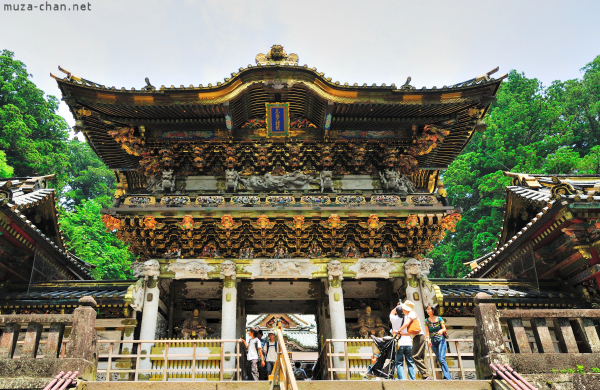
Our side trip, to get a way from Toyko, is to the area of Nikko.  To get there we will take the JR Tohoku Shinkansen from Tokyo to get Utsunomiya Station, and this will transfer us to the Nikko Line.  This trip takes 100 minutes, and easily paid through the Japan Rail Pass. Nikko has some of Japan’s most renowned shrines and temples, and in the morning we’ll visit Toshu-gu Shrine.  


Toshogu Shrine
Toshogu Shrine is famous for its carvings, especially the "Hear No Evil, Speak No Evil, See No Evil" Monkeys

The highlight of the trip though is Nikko Edomaruo (Edo Wonderland), which we’ll visit in the afternoon, and is easily accessible through a free Shuttle bus departing from Toshu-gu Shrine.  Edo Wonderland, is basically a history themed amusement park, that recreates the Japanese city in the Edo Period (1603-1868).  The park is just a small town built in Edo styled architecture, and populated by townspeople in period costumes (It’s actually been used many times as a backdrop for period jdorams/films).  When we arrive, we actually will have the opportunity to dress up, and also tour the towns shops, games and live shows. 

Some great attractions in the town, called Experience Zones, are a Haunted Temple filled with Japanese spirits and demons, and the Ninja Trick Maze which is a large maze that we would have to escape from.

What I would be most exited for is the park’s live action shows held in the many theaters around town.  The show I would love to see is the Grand Ninja Theater, where the actors are dressed as ninja and engage in battle with swords, magic and martial arts.  Not alot of people know this, but I was in Karate for 10 years of my life and received a black belt at age 15.  So my interests with martial arts and sword skill, from Karate, pushed me to search for animes/mangas that contained martial arts (ex. Naruto-ninja magic, Bleach-sword fighting, Dragon Ball- martial arts).  Learning the history of martial arts in this show will not only be educational, but really fun!  (Admission:4500 yen/53 CAD)  


Top: Edo Villagers, Live action Martial Arts show
Bottom: Edo Ninja actor, Ninja Trick Maze, the Edo styled town

Images: Google Images